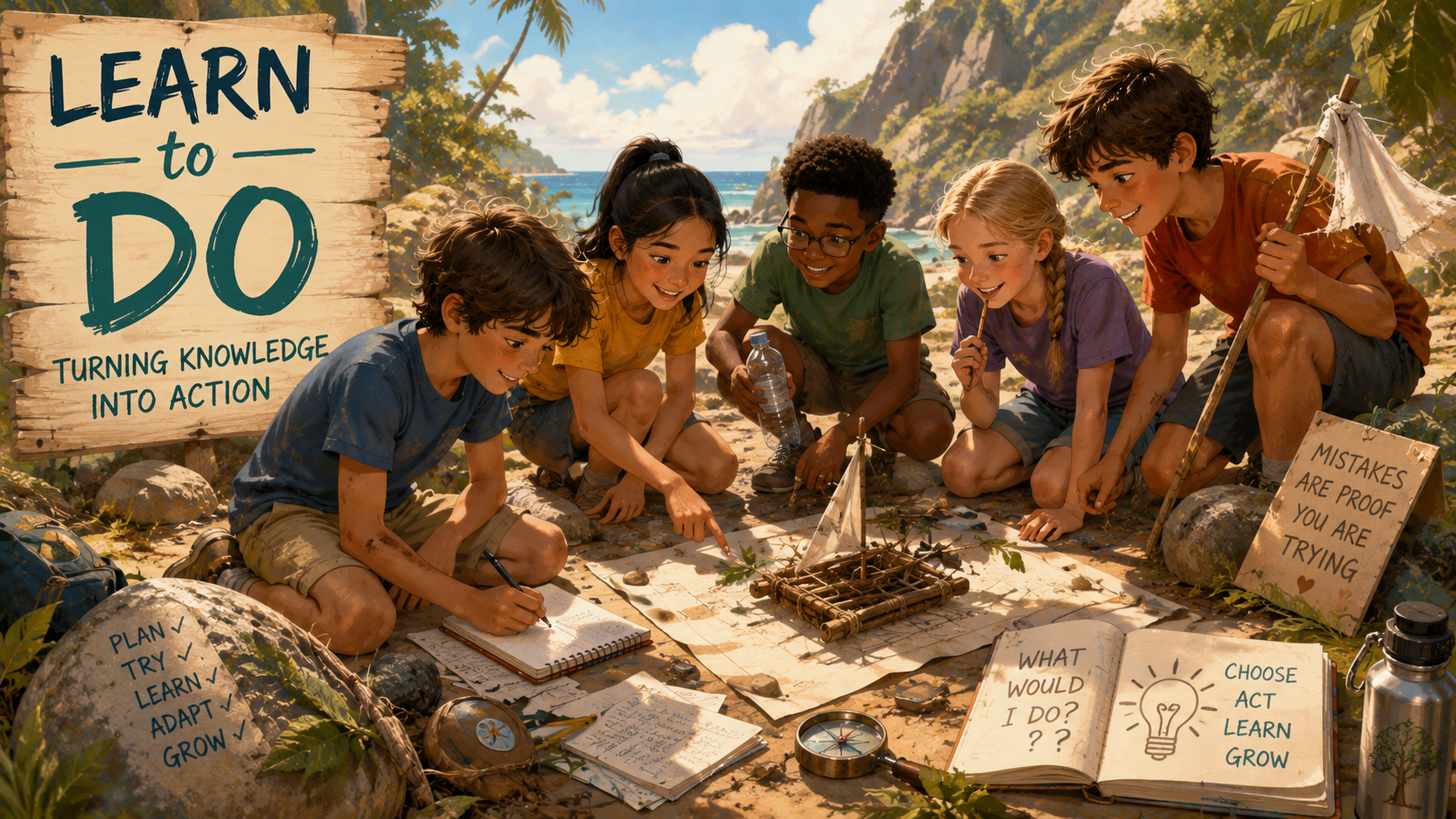

Learn to Do – Turning Knowledge into Action
"Knowing is not enough; we must apply. Willing is not enough; we must do." — Johann Wolfgang von Goethe
Imagine a child who can tell you exactly how to ride a bicycle. They can explain balance. They understand how the pedals work. They know why a helmet is important. They have watched countless videos. But they have never climbed onto a bicycle.
Would you say they know how to ride? Of course not.
Because there is a world of difference between knowing and doing.
Learning Happens Through Experience
One of the greatest challenges facing education today is that children are often rewarded for remembering information, yet have too few opportunities to apply it. Life doesn't hand us multiple-choice questions. It presents us with situations that require us to think, decide, adapt, and act.
Children need opportunities to experience learning, not simply receive it. The second pillar of learning,
Learn to Do, reminds us that knowledge only becomes meaningful when it is put into practice.
Emotional Intelligence Is Learned Through Action
No child learns resilience by reading the definition of resilience. They develop resilience by overcoming disappointment. No child learns teamwork by memorising the meaning of cooperation. They learn it by working alongside others, listening, compromising, and sharing responsibility. No child develops courage because someone explains courage. They discover courage when they choose to take the next step despite feeling afraid.
That is Emotional Intelligence in action. It is not something we tell children. It is something they experience.
Mistakes Are Powerful Teachers
As parents and educators, we naturally want to protect children from failure. Yet some of life's greatest lessons come from mistakes. When children solve their own problems, they develop confidence. When they make decisions, they learn responsibility. When they persevere through challenges, they discover resilience. Every obstacle becomes an opportunity for growth.
Perhaps one of the greatest gifts we can give children is not removing every difficulty from their path, but walking beside them as they learn to overcome it.
From Knowledge to Confidence
Children become confident not because they always succeed. They become confident because they realise they can keep going when things don't go according to plan.
Confidence grows through experience. Every challenge faced. Every problem solved. Every decision made. Every setback overcome. That is how capability is built.
Learning Through Story
Stories create safe places for children to practise life. As readers walk alongside characters, they make predictions, consider choices, solve problems, and reflect on consequences.
In Survive. Discover. Grow. – The Island Adventure, five young friends suddenly find themselves stranded on a remote island. There is no teacher with the answers. No parent to solve every problem. Together they must find water, make difficult decisions, overcome fear, resolve conflict, and support one another.
Readers are invited to think alongside the characters: "What would I do?" "Would I have made the same choice?" "Is there a better solution?"
The story doesn't simply tell children about resilience. It allows them to experience resilience through the journey. That is where lasting learning begins.
Preparing Children for Life
The future will not reward those who simply know the most. It will reward those who can adapt, create, collaborate, solve problems, and keep learning.
These are the skills that enable children to flourish in school, in relationships, in the workplace, and throughout life. Knowledge opens the door. Action helps us walk through it.
That is the heart of Learn to Do. Not simply filling young minds with information... But giving children opportunities to apply what they know, learn from experience, and discover that they are capable of far more than they ever imagined.
Because education is not just about preparing children to pass examinations. It is about preparing them to face life with confidence, courage, and purpose.
Next in the Series In the next article, we explore the third pillar of learning: Learn to Live Together – Why Empathy Is the Superpower of the Future
Because in a world that is becoming increasingly connected, one of the greatest skills our children can develop is the ability to understand, respect, and work alongside others.