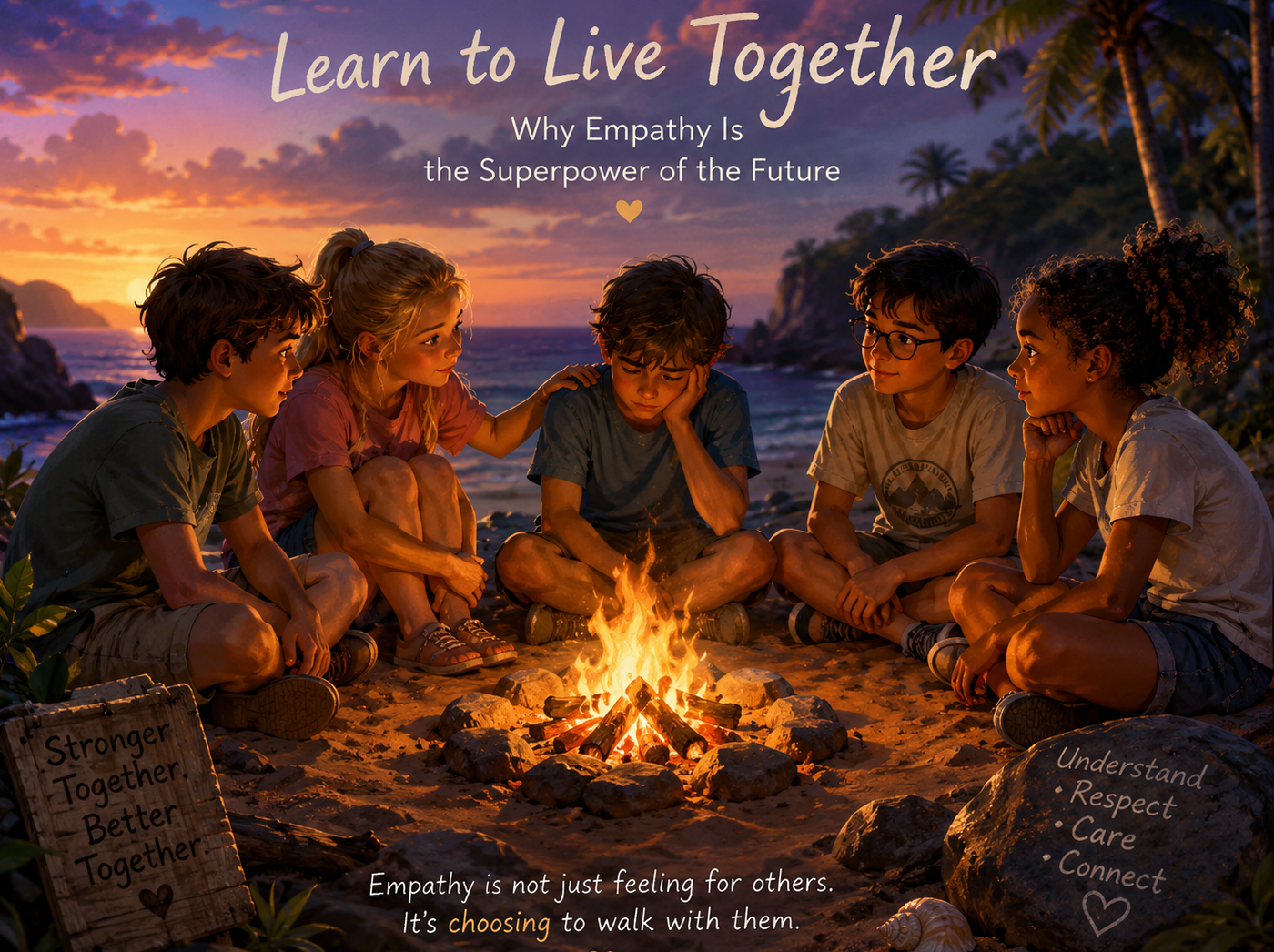

"Education is not simply about teaching children to read, write, and calculate. It is about preparing them to live successfully with other people."
Learn to Live Together – Why Empathy Is the Superpower of the Future
Every day, our children encounter people who think differently, look different, believe different things, and experience life in different ways. They will work with people from different cultures, collaborate with colleagues around the world, and build relationships in increasingly diverse communities.
The question is no longer whether they will meet people who are different from themselves. The question is whether they will know how to live, work, and thrive together.
This is why UNESCO identified "Learn to Live Together" as one of the Four Pillars of Education.
More Than Simply Getting Along
Learning to live together is about far more than being polite or avoiding conflict. It is about developing the ability to understand another person's perspective, communicate respectfully, resolve disagreements constructively, and recognise the value that every individual brings.
At the heart of these abilities lies one remarkable human quality: Empathy.
Why Empathy Matters
Empathy is often misunderstood as simply being kind. In reality, empathy is the ability to recognise and understand another person's feelings, experiences, and point of view. It allows us to pause before judging. To listen before speaking. To seek understanding before reacting.
Empathy builds trust, strengthens relationships, reduces conflict, and creates environments where people feel safe, valued, and respected.
Whether in a classroom, a family, a workplace, or a community, these are the foundations upon which healthy relationships are built.
A Skill for the Future
As artificial intelligence continues to transform the way we work, technical knowledge alone will no longer be enough. Many routine tasks will become automated.
The qualities that machines cannot easily replicate, compassion, understanding, collaboration, ethical judgement, and emotional connection, will become even more valuable.
In many ways, empathy is becoming one of the most important skills for the future. It is not only a human strength. It is a leadership strength.
Can Empathy Be Taught?
Absolutely. Children are not born knowing how to understand another person's feelings or perspectives. They learn these skills through relationships, conversations, examples, and experiences.
Stories are one of the most powerful ways to develop empathy because they allow children to see the world through someone else's eyes. As readers journey alongside characters, they begin to ask: "How would I feel?" "Why did they react that way?" "What would I have done?" Those questions are where empathy begins.
Bringing Emotional Intelligence to Life
This belief is at the heart of Survive. Discover. Grow. – The Island Adventure. Rather than teaching empathy as a lesson, the story invites young readers to experience it.
As Gavin, Chloe, Freddie, Andy, and Susan face uncertainty, disagreement, fear, and challenge, they gradually discover that survival is not simply about finding food or shelter, it is about learning to understand, trust, forgive, and support one another.
The greatest discoveries they make are not about the island. They are about themselves, and each other.
Preparing Children for Life
Our greatest hope should not simply be that our children become successful. It should be that they become compassionate. Because the future will always need people who can think clearly, work together, solve problems, and care deeply about others.
Perhaps that is why empathy is not merely another life skill. It may well be the superpower our world needs most.
Next in the series: Learn to Be – Helping Children Discover Who They Are